
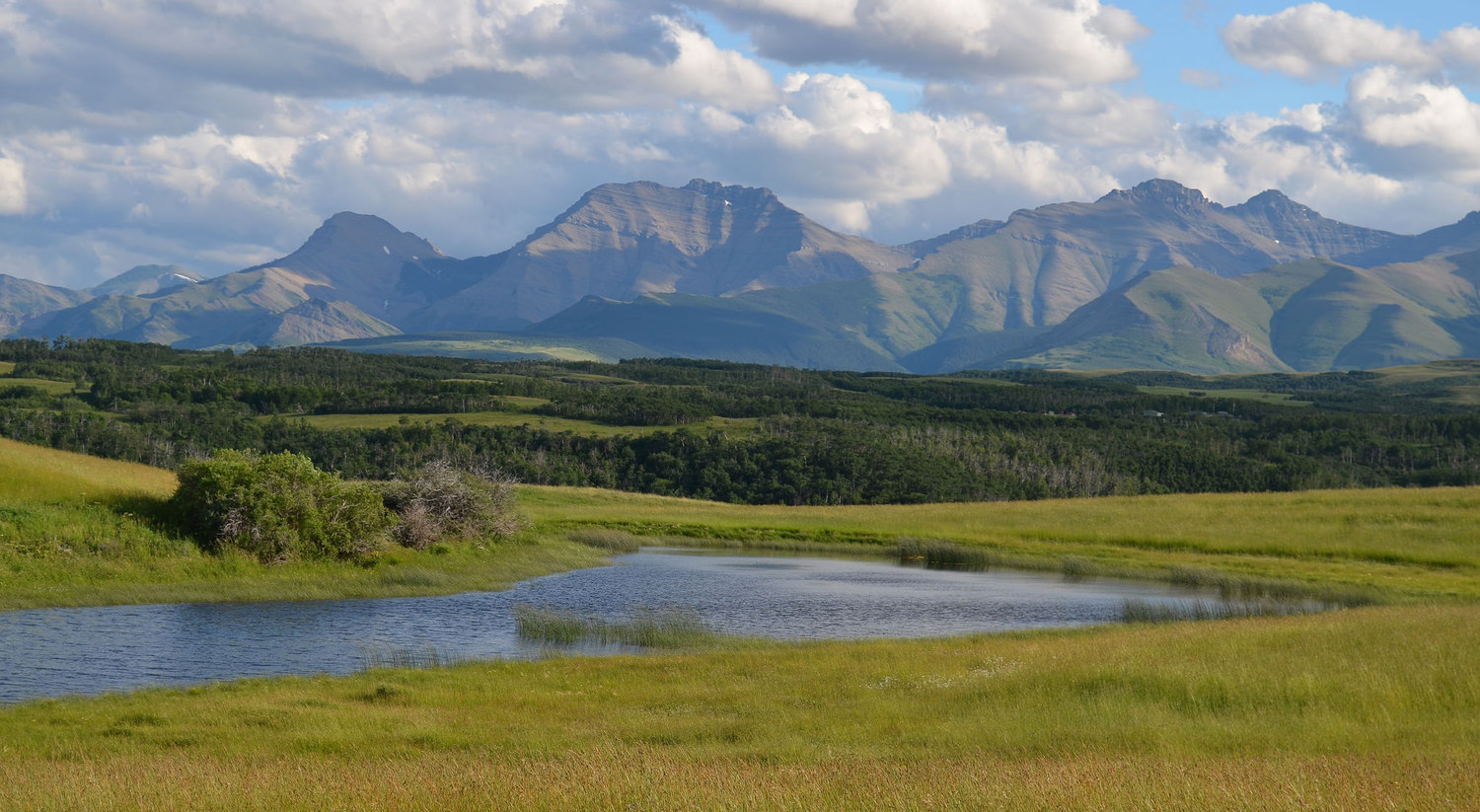
Strong mountain snowpack and improved precipitation levels are prompting provincial cabinet ministers to point to a more favourable water outlook for 2026 after several dry years across Alberta.
Minister of Environment and Protected Areas and MLA for Taber-Warner Grant Hunter said regular reports from the eastern slopes indicate snowpack levels are at normal to above-normal levels.
“We went through a few years of El Niño, which are drier periods, and now we’ve moved into La Niña and we’re starting to see those snowpacks come back again,” Hunter said. “For this coming year and last year, we should see normal or above-normal snowpacks.”
Snowpack is a key indicator of spring runoff and water availability during the growing season. Alberta conducts mountain snow surveys monthly from Feb. 1 to June 1 and combines that data with precipitation levels to develop water supply forecasts for 20 locations across central and southern Alberta.
Hunter said most long-term snow monitoring sites are currently reporting conditions that exceed seasonal averages, with the majority measuring above or well above normal levels.
“Normal” snowpack typically falls between the 40th and 60th percentile, while “above normal” ranges from the 60th to 80th percentile and higher, he said.
Provincial data show snow-water equivalent measurements this February are significantly higher in many basins compared with the same time in 2025, with increases ranging from 44 millimetres to 172 millimetres depending on location.
The improved outlook is welcome news for farmers across southern Alberta, including dryland producers and irrigators.
Agriculture and Irrigation Minister R.J. Sigurdson said the government is taking a whole-government approach to managing provincial water systems.
“There have been plenty of challenges thrown at our farmers and ranchers over the past few years and, while growing conditions were better in 2025 for most of the province, localized weather events and other stressors put pressure on many producers. I’m optimistic that early moisture indicators paint a positive picture for the 2026 growing season,” Sigurdson said.
The Oldman Watershed Council echoed that cautious optimism in a recent Facebook post responding to the provincial report.
The post reads, “Snowpack is trending up across Alberta, and that is a promising signal for southern Alberta, including the Oldman watershed. Alberta’s February 2026 Water Supply Outlook forecasts normal to above-normal March–September river volumes in the Oldman River Basin and notes these volumes are expected to be above the levels observed in 2025. That said, this is still an early-season outlook, and conditions can shift with March and April snow, plus spring and early-summer rainfall.”
Hunter said the improved snowpack will also help restore off-stream storage reservoirs that were drawn down during recent drought years.
“That’s exactly what they were created for, is for those tougher years,” he said. “Our system worked perfectly during those tough years … to be able to get us through those times.”
He said replenished reservoirs strengthen Alberta’s ability to manage future dry cycles and confirmed he will continue advocating for expanded storage capacity. Hunter pointed to the Chin Reservoir expansion, which is expected to add 65,000 acre-feet of additional irrigation storage.
While the early outlook is encouraging, Hunter said March and April snowfalls and June rains remain critical to Alberta’s overall water supply.